Your mouth is a highly active environment, constantly exposed to bacteria, everyday wear, and pressure. Over time, teeth may wear down and develop decay. When that happens, dental restorations – from fillings and crowns to bridges – repair or replace damaged teeth, prevent further damage, and restore oral function.
At Gray Family Dental, we provide dental restoration services to patients in Janesville and the surrounding areas. Schedule an appointment to learn more about the right treatment plan for your oral needs.

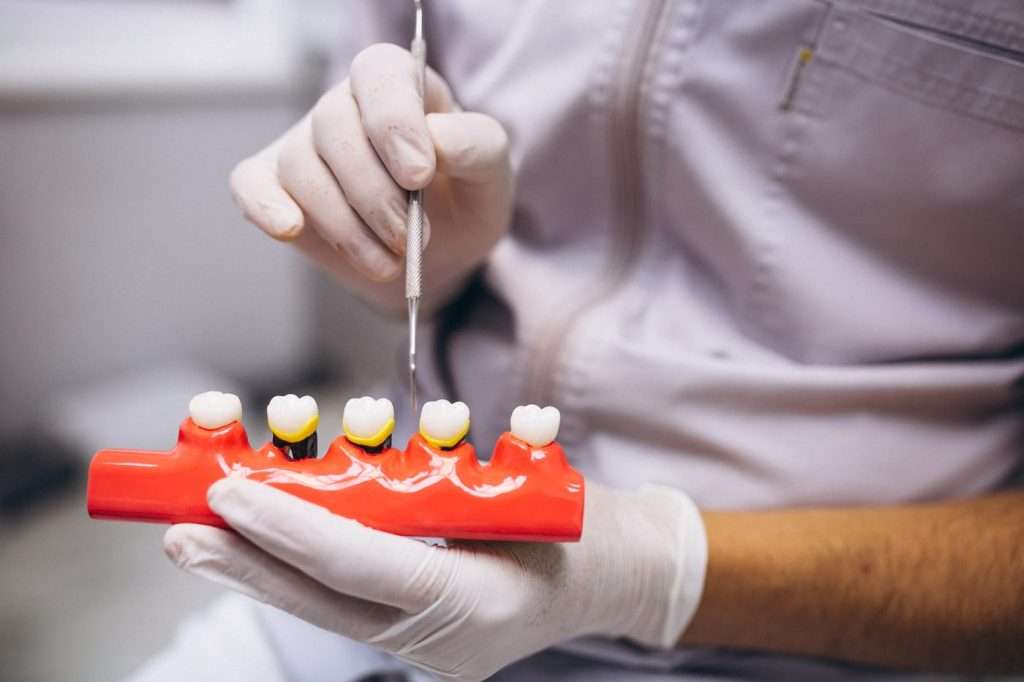
Your mouth plays a vital role in how you experience the world. Patients lose tooth structure to decay, chips, fractures, or a previously placed restoration breaking down. Dental restoration preserves as much of your natural tooth as possible while restoring the function of the mouth and teeth.
A direct restoration is created and placed entirely within the mouth. Small amounts of damaged tooth structure are replaced with a filling. Once the area is prepared, your dentist places the filling material and shapes it to restore tooth function. Some materials are hardened with a curing light, sealing and protecting the affected area. Depending on your needs and the location of the tooth, fillings may be composite resin, amalgam, or glass ionomer.
Indirect restorations are custom-made in a lab to fit your dental anatomy precisely, then placed on or attached to the affected tooth. They are used when more extensive repair or tooth replacement is required.
When a filling is not enough to restore a tooth, your dentist will recommend one of these custom-made restorations.
Replace one or more missing teeth, anchored to the healthy teeth on either side of the gap.
Cover and strengthen a damaged or weakened tooth, restoring its shape and its ability to take normal bite pressure.
Support replacement teeth for one or more missing teeth, acting as an artificial root set into the jawbone.
Repair damage that is too extensive for a filling but does not call for a full crown.
A dental filling is a common restorative procedure that repairs teeth damaged by decay or fracture. It seals gaps to help prevent bacteria spreading further and restores the tooth to normal function.
Depending on the location of the cavity, your aesthetic preferences, and how much bite strength the tooth needs, your dentist may select silver amalgam, composite resin, or glass ionomer. Composite resin is a popular choice because it matches the appearance of natural teeth more closely.

A dental filling is usually completed in a single visit. Here is what the appointment involves.
A topical gel and a local anesthetic are applied so you do not feel pain during treatment.
A specialized drill or other dental tools clear away the infected tissue from the tooth.
The area is disinfected and shaped so it will properly support the filling material.
The filling material is applied in layers, and a curing light may be used to harden it.
The dentist smooths the edges and checks that your upper and lower bite meet comfortably.
A dental restoration strengthens teeth weakened by severe decay or damage and helps prevent further complications. Fillings stop the decay process while preserving the tooth, and they also restore teeth that are fractured, broken, or worn down by habits such as nail-biting or grinding.
Indirect restorations become necessary when a filling is not enough to restore a tooth’s function. A crown is a good option for an unstable tooth, a bridge can replace several damaged teeth to restore proper chewing, and an implant can replace a missing tooth and prevent problems such as jawbone erosion and impaired chewing.
Patients with cavities, other localized dental problems, or structural damage to their teeth are the right candidates for restoration. Our dentist considers the type, extent, and location of the damage when deciding which treatment fits.
Patients who no longer have enough supporting tooth structure to hold a filling are good candidates for indirect restorations, which add strength where more extensive damage has occurred.
Dental fillings are typically made of composite resin or silver amalgam. Composite resins are a popular choice because they more closely match the appearance of natural teeth. Consult with our dentist to choose the right filling material for your oral needs.
Keep up a good oral health routine – brushing twice a day and flossing at least once a day – to prevent bacterial infections around the filling. A balanced diet that limits sugary foods and drinks and avoids very hard foods also helps prevent further damage and decay, which supports a longer lifespan for the filling.
If a cavity is left untreated, the decay can spread beyond the enamel into the tooth’s soft tissues. If it reaches the pulp, which contains nerves and blood vessels, it may be too late for a filling and more complex treatment may be required. It is best to fill a cavity in its early stages.
There are several options, and the goal is the material best suited to your condition. At your appointment, your dentist will weigh the cavity’s location, how visible it is, the extent of the decay, cost, and your insurance coverage.
Depending on your oral health, your dentist will advise on the right crown material or combination of materials. Crowns are commonly made of stainless steel, other metals, porcelain-fused-to-metal, all-ceramic, all-resin, or all-porcelain.
Dentistry has come a long way since drills and needles. Modern solutions offer comfortable ways to prevent cavities, repair damaged teeth, and restore oral function. Start your journey to a healthier smile today.