Endodontic treatment such as root canal therapy becomes necessary when deep decay or damage reaches the inside of the tooth, causing inflammation or infection that can lead to severe pain. A root canal removes the inflamed or infected pulp and nerves from inside the tooth, eliminating bacteria and saving the tooth from extraction.
Gray Family Dental offers endodontic care to patients in Janesville and the surrounding areas. Schedule an appointment to find out whether root canal treatment is right for you.
A root canal is a common treatment designed to save a decayed, damaged, or infected tooth. The inflamed or infected pulp is removed, and the inside of the tooth is cleaned and disinfected.
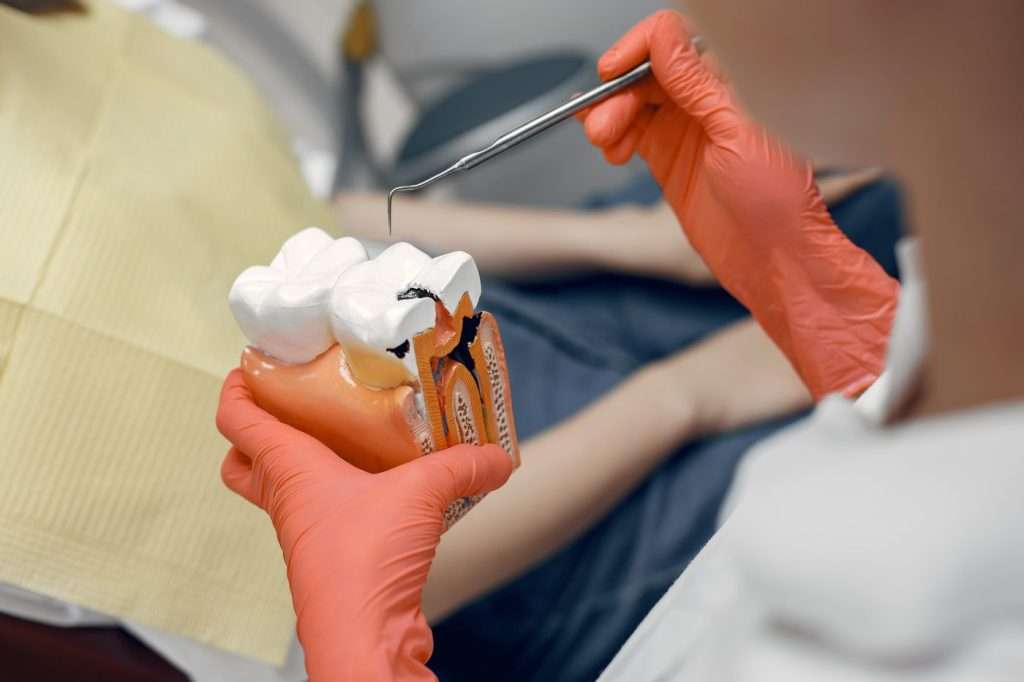
A tooth has three main layers. Enamel is the mineralized outer shell. Dentin is the porous, bone-like middle layer containing microscopic tubules. The pulp is the soft living tissue inside, extending from the pulp chamber into the root canals, and it holds the blood vessels, connective tissue, and nerve fibers.
Deep decay or trauma can breach the enamel and dentin and let bacteria reach the pulp. An abscess, or pocket of pus, may then form around the root. Left untreated, the bacteria multiply and spread. A root canal stops the infection before it causes further damage or bone loss around the tooth.
Treatment happens in two stages, and both are carried out under local anesthesia.
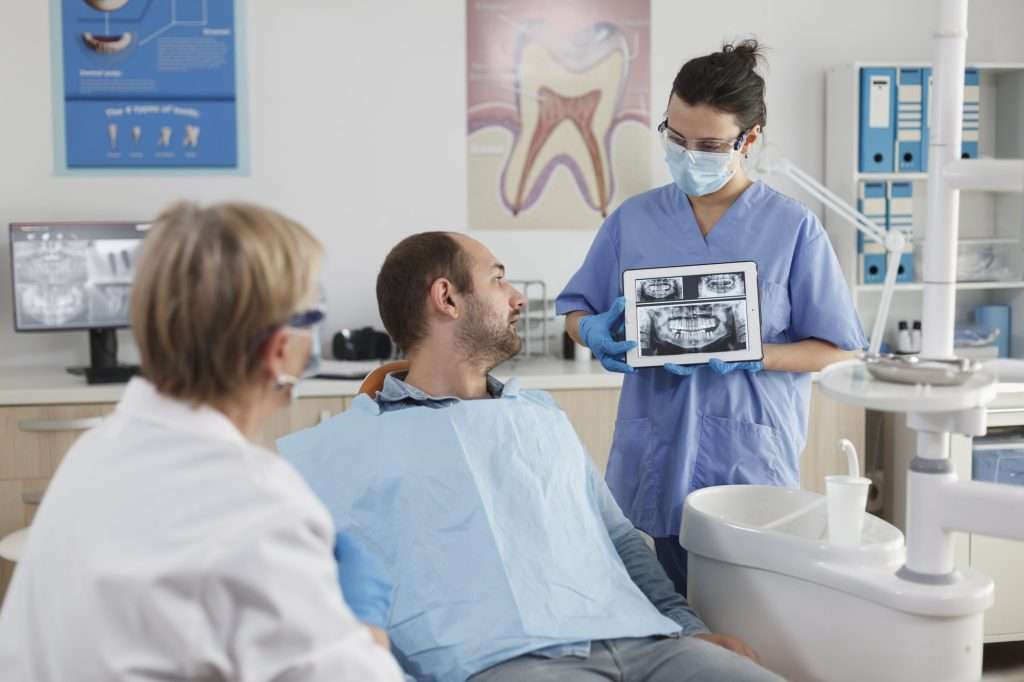
Signs that the pulp may be inflamed or infected include lingering sensitivity to hot or cold, pain on biting, swelling, or bumps on the gums. Your dentist examines the tooth and takes X-rays to confirm the diagnosis.
Your dentist numbs the area and places a dental dam to keep the tooth clean and free of saliva. A small opening is made in the crown to remove the infected pulp. The canals are flushed with antibacterial solutions, shaped with flexible files, and sealed with a biocompatible material called gutta-percha. A temporary filling holds until your follow-up, when a permanent crown or other restoration protects the tooth.

The goal of a root canal is to save and preserve your natural tooth. Here is what the treatment does for you.
Removing the infected nerve and pulp relieves the pain and sensitivity that come with an inflamed tooth.
Related swelling settles, and a new crown or filling restores how the tooth looks.
Taking out the infected pulp prevents bacteria from spreading into the surrounding structures.
The tooth is disinfected and sealed with a biocompatible filling, which brings back normal chewing.
Keeping the tooth maintains your bite alignment, protects jawbone density, and stops neighboring teeth from shifting.
Brushing twice a day with a fluoride toothpaste, flossing daily, and treating dental pain early all help prevent inflammation and infection of the pulp in the first place.
Leaving an infected tooth untreated can lead to bone loss, worsening facial swelling, and other health complications. An alternative is reasonable as long as it fits your oral health needs and your dentist recommends it as the best course of action.
Removes the infected tooth entirely to relieve pain and eliminate the source of infection. Lower initial cost, but it leaves a gap that can let neighboring teeth shift.
Replaces the root of an extracted tooth with a titanium or zirconia post supporting a crown. Protects the jawbone and closely resembles a natural tooth.
Fills the gap by anchoring an artificial tooth to the healthy teeth next to it. Faster than an implant, but the adjacent teeth may need reshaping.
A form of vital pulp therapy that removes the damaged part of the pulp while leaving the healthy root tissue alive. Common on younger teeth, and appropriate for mature teeth in select cases.
Places a biocompatible seal directly over exposed pulp. This only works when the condition of the pulp makes it suitable.
Root canal treatment is performed under local anesthesia and generally causes no more discomfort than having a cavity filled. You can discuss your pain tolerance and any other concerns with your dentist beforehand.
The cost varies for each patient. The extent of the damage, the location of the affected root, and your insurance coverage all affect the figure.
Every plan and provider is different. Many dental plans provide partial coverage for a medically necessary root canal, but coverage varies. Contact your insurance provider before the procedure to find out what applies.
Most people recover from the immediate effects within a week, with mild soreness for a few days. Your dentist may prescribe pain medication. Most patients return to work or school within a couple of days, sometimes the same day. If severe or worsening pain persists beyond several days, contact your dentist.
You may be advised to take over-the-counter medication to minimize pain, swelling, and inflammation. Avoid chewing hard foods on the treated tooth so it does not break before it is fully restored. A follow-up appointment confirms that healing is progressing well.
Your dentist may recommend retreatment, an apicoectomy, or extraction. An apicoectomy is a minor surgical procedure in which the gum tissue is opened and the infected tissue and the tip of the tooth root are removed.
Endodontic treatment can relieve pain, treat infection, and preserve your natural tooth. Call us to schedule an appointment and find out whether root canal therapy is right for you.